about the organic farmer
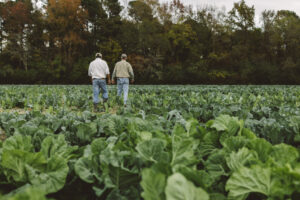
Organic farmers Neal and Linda Johnson have dedicated their lives to farming, carrying forward a family legacy that spans five generations. On their farm in Meadow, North Carolina, they grow multiple varieties of organic sweet potatoes in the same sandy soil that has sustained their family for decades.
Neal’s connection to the land runs deep. He’s been farming since childhood, guided by lessons of patience, resilience, and faith. Linda manages the business side of the operation, keeping certifications and daily logistics in order.
Together, the Johnsons have built a farm rooted in hard work, care, and community. From long days in the field to shared meals with family and crew, their approach to farming honors the land and ensures this legacy continues for generations to come.


"It was all sand, and I think that sand saved my life. I reckon I’ve been farming ever since."
Neal, how long have you been farming?
All my life. I’m 62 now, and the first thing I can remember is getting run over by a tractor when I was about three and a half. I was sitting on a 35 Massey Ferguson, driving it, and I fell off. The back wheel ran right across my back. The man I was with was scared to change gears, he said it took an iron bar to lift it off me. The doctor didn’t believe a tractor had run over me until he saw the tread marks across my back. It was all sand, and I think that sand saved my life. I reckon I’ve been farming ever since.
What made you decide to start growing organically?
At the time, it was a way to increase sales, and the price was good. The conventional market was tight, and all the older packers already had things locked down. Growing organic gave us a way to sell at retail prices instead of trying to compete on volume. But it’s not easy, you either do really well or you make nothing. The weather, weeds, insects, and seed quality all play a part. You just have to work with nature instead of against it and grow varieties that can handle it.

"The old-time cooks around here, they’ll call me up and say, “Neal, have you dug those sweet ones yet? Don’t bring me the other ones. Bring me them sweet ones."
What are some of your favorite varieties to grow and eat?
I like the Murasaki because the worms don’t like them and the deer don’t like them, but people do. We sell a lot of them. The purple varieties have done great too. But my favorite one to eat is the Hatteras. They’re super sweet right out of the field and were developed by NC State. I might be the only guy still growing them besides the university. They bleed a little juice, which stains the skin, so people used to think they were dirty, but that’s actually the sweetness showing. The old-time cooks around here, they’ll call me up and say, “Neal, have you dug those sweet ones yet? Don’t bring me the other ones. Bring me them sweet ones.”
Linda, what’s it like being part of a fifth-generation farm family?
I grew up in a farm family myself, and I wouldn’t have it any other way. Neil was actually the first guy I ever dated when I was 14. I told my daddy, “If I ever get married, it’s gonna be that one.” Years later, I did. I was 29 when we got married. Farming’s just in our blood. It’s not always easy, but it’s what we know, and it’s how we were both raised.
What’s one of your favorite memories growing up on the farm?
It’s just in you. When I was growing up, we planted, watched it grow, and then harvested, it was all about seeing it through. But the best part was working with family. We were always together, working and laughing. When the season ended, it was like part of you was gone because the work was done and everyone went their own way again. It was hot, hard work, but we enjoyed it. You either have farming in your blood or you don’t.

"You can do everything right, and in fifteen minutes, the weather or the good Lord can change it all."
How do you divide responsibilities on the farm today?
Linda: Neal’s in the fields most of the time. I handle the paperwork, certifications, and inspections. The organic paperwork isn’t too bad, but the Global GAP inspection, that’s a lot. We’ve got one this Thursday actually. I also handle anything that involves a computer or a phone. Neal’s not exactly the most tech-savvy person. [laughs] Tyler, our son, helps too. He’s 26 and already farming. He loves sweet potatoes and soybeans, and I think he’ll keep the operation going when Neal decides to slow down, if he ever does.
Farming comes with a lot of stress. How do you manage it?
Linda: I tell Neal to take it one day at a time. We both lean on our faith a lot. Neal always says, “Put it in the good Lord’s hands,” and that helps take the burden off. We also make sure to have family dinners together, us, the kids, and the crew. We sit down, eat, maybe have a glass of wine or a beer, and just talk about the day. It keeps us grounded.
Neal: Yeah, that’s true. You can do everything right, and in fifteen minutes, the weather or the good Lord can change it all. So you just do your best, and then you let go of what you can’t control.

"For me, it’s the people. Our family, our crew, everyone’s in it together."
What do you love most about farming?
Neal: Watching something grow from the ground up. You plant it, you take care of it, and when you finally dig it up, you see what your hard work made. It’s satisfying every time.
Linda: For me, it’s the people. Our family, our crew, everyone’s in it together. It’s long hours and hard work, but it’s ours, and that makes it worth it.
What do you hope for the future of the farm?
Linda: I hope Tyler keeps it going. He loves farming, especially sweet potatoes, and I think he’ll build on what we’ve started.
Neal: Yeah, I want to see him take it further, keep growing good crops, keep taking care of the land. As long as the soil’s good, we’ll be all right.
what they grow
Bonita Sweet Potatoes
Covington Sweet Potatoes
Garnet Sweet Potatoes
Murasaki Sweet Potatoes
Purple Sweet Potatoes
If you’re a buyer and want to learn more about our North Carolina, organic produce availability, reach out! We’d love to hear from you. And if you’re curious and want to learn more about organic produce, farming, and our food system, sign up for Happy Dirt’s newsletter!