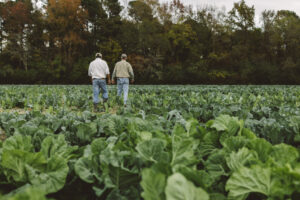
about the organic farm
For T.Y. Baker III, farming is more than a livelihood; it’s a way of life. Growing up on his family’s land, he spent hours in the fields, learning the rhythms of the seasons and the value of hard work from his grandparents.
When tobacco allotments ended, he needed a crop that could sustain the farm. He turned to organic muscadine grapes, planting his first vines in 2009 and committing to organic practices from the start. Healthy soil is the foundation of everything he grows.
Today, his vineyard covers more than eight acres of organic Triumph and Supreme muscadines, producing grapes that are sweet, flavorful, and full of history. Each harvest reflects T.Y.’s dedication to the land, his family’s legacy, and a way of farming that will keep Moccasin Creek Vineyard thriving for generations.


"Basically, it’s all about the dirt. If you get the soil where it needs to be, your fruit will be good, and it may even help repel pests and disease."
How long have you been growing muscadine grapes, and what lead you down that path?
When the tobacco allotment ended, I knew I needed a new crop to help the farm pay for itself. Muscadine grapes felt like a natural fit because this old tobacco farm has sandy, loamy soil, and my granddad had been farming here since I was a kid. In 2009, we planted the vineyard, joining a handful of others who were starting organic muscadine vineyards at the same time. Today, only two of us remain fully organic out of the original group. I never wanted to go conventional because it requires too much chemical input, so we’ve maintained organic practices for the last 13 or 14 years.
Why was it important for you to grow organically?
Because I believe in it. It all makes sense to me. We went through a sustainable agriculture training, and it was music to my ears. Basically, it’s all about the dirt. If you get the soil where it needs to be, your fruit will be good, and it may even help repel pests and disease. That struck a chord with me because for the past two years, I haven’t had any pests to speak of. Before that, Japanese beetles were a big problem, like they are in many vineyards, but I haven’t had to deal with them lately. I believe that’s largely because of the way we farm organically. When we mow, everything stays here, adding more biomass back into the soil.

"They’re (organic muscadine grapes) one of those rare fruits where the skin, pulp, and seeds all offer something good for you."
Tell us about your vineyard today.
Right now, the vineyard covers about eight acres, with more than 600 vines planted. When you walk through, you’ll see long rows of organic Triumph and Supreme muscadines. It may not sound big compared to some farms, but every vine out there was planted with the idea of creating something sustainable. It’s just the right size to stay hands-on and keep a close eye on how everything’s growing.
What varieties of muscadines do you grow, and what makes them special?
We grow Triumph, which is a bronze muscadine that’s bigger and sweeter than the old scuppernong variety a lot of folks remember, and Supreme, a purple muscadine that’s just as rich and flavorful. Both are fantastic for fresh eating. What makes muscadines unique is not just their taste but their health benefits. They’re loaded with resveratrol and other compounds that support heart health, gut health, and even help with inflammation. They’re one of those rare fruits where the skin, pulp, and seeds all offer something good for you.

"When I walk through my organic muscadine vineyard now, I can’t help but think about how those muscadines shaped my childhood."
Do you have a favorite muscadine memory from growing up?
I do. My grandfather had this old muscadine vine, and every September, it was part of my life. My school lunchbox was never without grapes from that vines. He made sure of it. That memory stuck with me. When I walk through my organic muscadine vineyard now, I can’t help but think about how those muscadines shaped my childhood. This vineyard isn’t just about growing fruit; it’s about carrying forward that sense of family and tradition.
What do you hope people experience when they eat your muscadines?
I hope they taste the difference that comes from fruit grown with care. These grapes aren’t just sweet; they carry a story. Every bunch represents healthy soil, hard work, and respect for the land. More than anything, I want people to feel connected to their health, to where their food comes from, and maybe even to their own memories of muscadines if they grew up with them like I did or not.


If you’re a buyer and want to learn more about our North Carolina, organic produce availability, reach out! We’d love to hear from you. And if you’re curious and want to learn more about organic produce, farming, and our food system, sign up for Happy Dirt’s newsletter!